Real Estate Marketing: Strategies, Examples, and Ideas That Actually Work
Table of Contents
- What Is Real Estate Marketing?
- Why Does Real Estate Marketing Feel So Hard?
- 1. No clear plan for where to focus
- 2. Results take time in real estate
- 3. Most advice focuses on posting instead of strategy
- 4. Standing out locally is harder
- How to Make a Marketing Plan for Real Estate?
- 1. Start with a clear goal
- 2. Define who you serve
- 3. Pick one or two primary channels
- 4. Choose content pillars
- 5. Set a weekly plan you can follow
- 6. Track only important KPIs
- 7. Review and refine your plan
- Top Real Estate Marketing Strategies that Work
- 1. Build authority in one specific market
- 2. Repeat the same buyer and seller questions on purpose
- 3. Position real estate listings as guidance instead of ads
- 4. Create interesting and authority-driven content to engage people and stay visible
- 5. Use short-form videos to connect with your audience
- 6. Share client stories that show how you think
- 7. Maintain visibility during long consideration cycles with email
- 8. Create one high-value local resource and repurpose it everywhere
- 9. Optimize for conversations
- 10. Design content for silent followers who don’t engage
- 11. Create content that supports referral conversations
- Real Estate Marketing Ideas You Can Use Right Away
- 1. Run campaigns for open houses
- 2. Turn a "Just Sold" moment into a multi-touch campaign
- 3. Use story-driven social posts tied to real events
- 4. Publish a home value estimation landing page
- 5. Host micro-events online and offline
- 6. Offer valuable resources as lead magnet
- 3 Common Mistakes to Avoid in Real Estate Marketing
- 1. Sharing market information without guidance
- 2. Switching strategies too often
- 3. Tracking posts instead of decision signals
- Wrapping Up
- Frequently Asked Questions
- 1. What is the best way to market real estate?
- 2. Does real estate marketing work on most social media platforms?
- 3. What marketing strategies work best for selling properties?
- 4. Which questions do sellers ask about marketing strategies?
- 5. How can social media polls or engaging questions attract buyers?
- 6. How do you create an effective real estate marketing plan or budget?
- 7. What metrics should be tracked for real estate campaigns?
Most people start their home search by looking for answers.“Is this a good area to live in?” “What’s the vibe of this neighborhood?” or “Should I rent or buy?”
That’s where real estate marketing begins, long before anyone reaches out to an agent.
Today, your content shows up in search results, gets saved for later, and helps people quietly decide who they trust in a local market. Which means marketing in real estate isn’t about posting more. It’s about showing up with the right context and in ways people actually relate to.
If you want your marketing to attract real clients (not just views), you need a strategy that combines local insight, clarity, and consistency.
Read on to understand what real estate marketing actually looks like now, how to build a plan that fits your business, and the strategies and ideas that actually help you get found and contacted.
What Is Real Estate Marketing?
Real estate marketing is about becoming the name that comes to mind when someone starts planning a move, whether that’s buying, selling, or relocating to a new city. It’s about building enough familiarity and trust that potential buyers and sellers naturally turn into clients.
Real estate marketing usually includes local outreach, social media, online visibility, email marketing, and staying in touch with past clients. But effective marketing comes down to getting a few core things right:
- Showing up consistently for the right audience
- Being clear about who you help and where you work
- Creating content that answers the questions your future clients are actually asking
When those three things are in place? Marketing starts to feel a lot less like a chore.
Why Does Real Estate Marketing Feel So Hard?
Real estate marketing feels harder than it should because most agents are competing for attention in a crowded space without a clear plan for standing out.
1. No clear plan for where to focus
You might think showing up everywhere is the key to building visibility—social media, email, Google search, and local networks.
But no one tells you this: with so many options, it’s easy for your efforts to get spread across different channels, formats, and ideas. This often makes it tough to pinpoint what’s actually moving your business forward. Over time, that lack of focus can make real estate marketing feel scattered and harder to manage than it needs to be.
2. Results take time in real estate
The decision cycle in real estate is long. Buyers and sellers often follow along quietly for months before they ever reach out.
Because the results aren’t immediate, it can be hard to tell what’s working. That uncertainty makes it tempting to change direction too quickly, even when your efforts are slowly building awareness in the background.
3. Most advice focuses on posting instead of strategy
A lot of real estate marketing advice centers on what to post. But what really matters is why certain content works for your audience and your business.
Without that bigger-picture strategy, it’s easy to keep posting without seeing consistent inquiries or leads.
4. Standing out locally is harder
Real estate is deeply local. What works in one market doesn’t always translate to another.
Generic content often misses the mark because it doesn’t reflect local knowledge or address the questions buyers and sellers in your area actually have. When your content feels more connected to your market and your audience, it becomes much easier for people to see why they should work with you.
How to Make a Marketing Plan for Real Estate?
Making a real estate marketing plan is about clarity. Know who you’re talking to, where you’ll show up, what you’ll create consistently, and how you’ll measure results. When you start with a simple plan, everything you post serves a purpose. For agents who are starting your business in real estate, building a clear marketing plan early can help create consistent visibility and attract the right clients from the beginning.
1. Start with a clear goal
Your plan begins with one specific outcome you want in the next 90 days. For example:
- Book 5 listing appointments
- Generate 10 quality conversations from social media
- Get 3 buyer leads from local content
About 75% of real estate agents use social media for lead generation, but without a clear goal, it becomes hard to know what’s actually working. Defining one outcome helps you choose the right platform and stay focused.
Want to know which social channels are best for real estate agents? Check out the Top 5 Social Media Platforms for Realtors.
2. Define who you serve
One of the biggest leaks in a marketing plan is a vague audience. If you try to talk to everyone, you end up connecting with no one. So, define your target:
- Geography: Specific neighborhood(s) or ZIP codes
- Client type: First-time buyers, sellers in a range, investors, downsizers
- Intent: Local searches, people researching market trends, relocation interest
This matters because 52% of buyers found their homes online. If your content doesn’t resonate well enough with the locals, you lose traction before the first conversation.
3. Pick one or two primary channels
Once you know your audience, you can choose where you’ll show up. Pick a real estate marketing channel where your future clientele is the most active.
Organic social media channels (Instagram, Facebook) work well for local visibility and conversations while tools like WhatsApp marketing automation platforms help convert that interest into direct, high-intent conversations. Search visibility (Google Business Profile and local SEO) captures intent. And email or CRM follow-ups keep past clients warm.
Because most buyers and sellers hire the first agent who actually picks up, some teams add an AI appointment setter that answers new-lead calls instantly, qualifies them, and books the showing even while you're out at one.
Include a list of channels you’ll post on each week in your plan.
4. Choose content pillars
Content pillars are the categories you repeat weekly to keep your social posts organized. Select around three pillars to keep your marketing focused.
Here are a few good examples for real estate:
- Local & Relocation: Local guide posts like ‘Where to eat in NYC’, ‘Ranking my favorite places in Chicago’ and relocation posts like ‘5 underrated LA neighborhoods that’ll blow up in 2026.’
- Brand Authority: Authority builder and personal brand builder posts like ‘5 things I never skip when showing homes’, ‘2025 Recap’ or ‘Being a realtor is…’
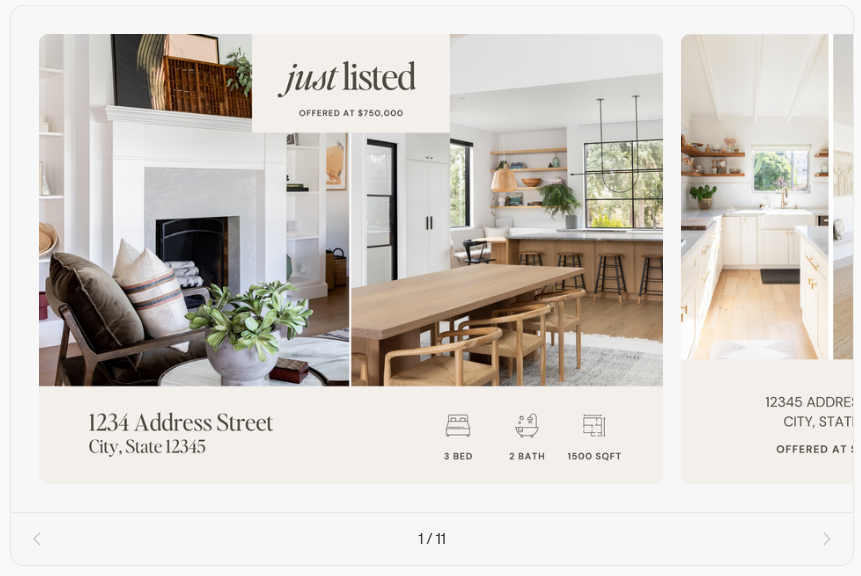
- Listings & Neighborhoods: Listing feature posts like ‘5 things I hate about this listing in NYC,’ neighborhood roundup posts like ‘3 neighborhoods in LA I’d invest in right now’ and sold listing case study posts with before and after photos.
When you look at your calendar, make sure your posts slot into one of these pillars. This structure helps you:
- Reach people living in a particular city or are planning to move but buying or selling isn’t on their mind yet.
- Nurture leads by building familiarity and trust through consistent, personality-driven content that shows how you think and how you work.
- Convert by giving the right people a reason to reach out when they start getting serious about making a move.
The content system inside Coffee & Contracts is built around these exact pillars and organized into a weekly rhythm so you're never starting from scratch or guessing what to post. When your content is already mapped to such pillars, you’ll naturally cover all three goals—reaching new people, building trust over time, and creating moments that lead to real conversations.
Read more: How to Record B-Roll as an Agent: The Ultimate Guide
5. Set a weekly plan you can follow
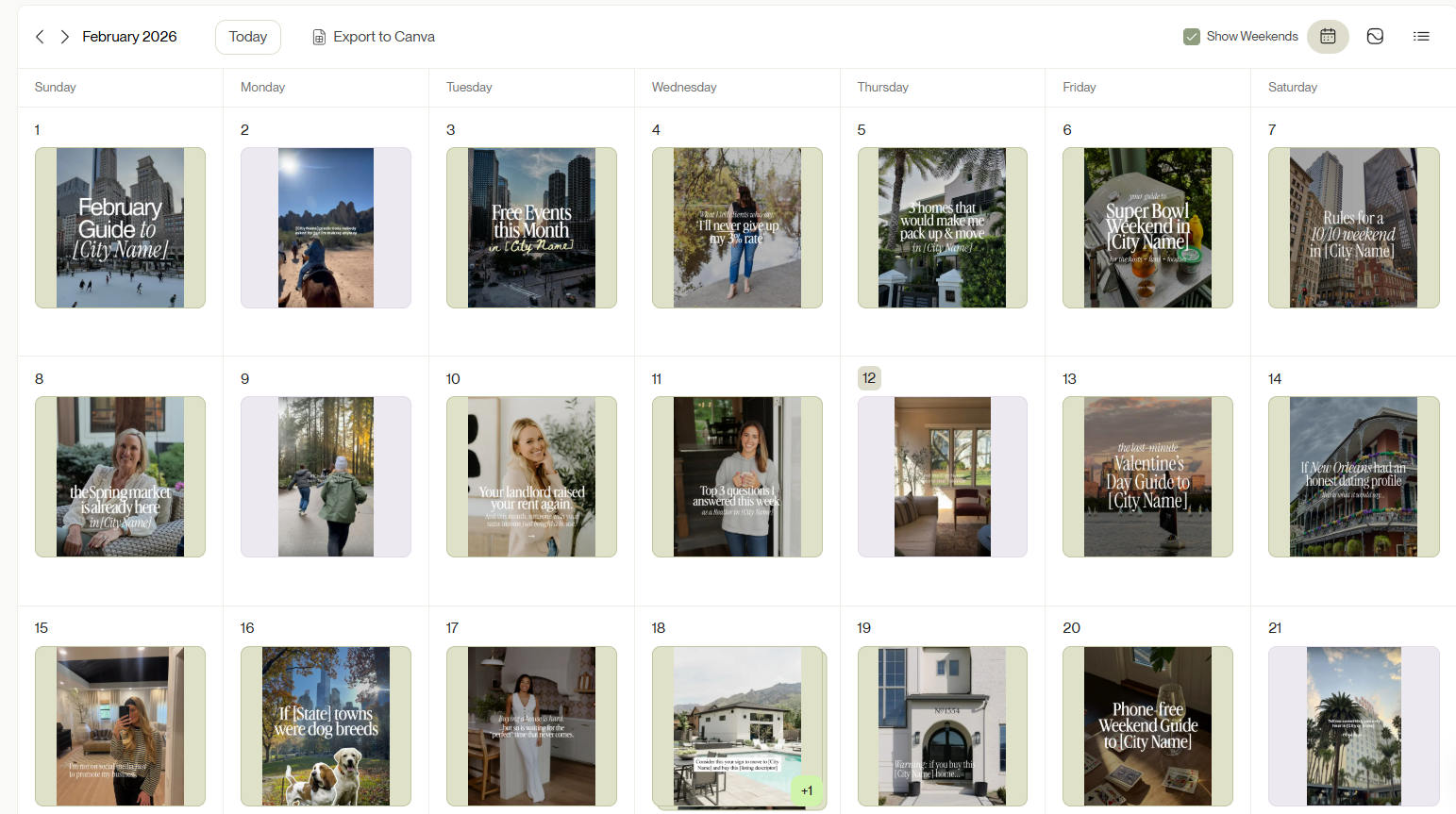
Here’s the thing: most marketing plans fall apart because they aren’t built around real-life schedules. If your plan doesn’t fit your busy week, consistency becomes impossible. So instead of chasing an ideal routine, build a simple weekly rhythm you can actually stick to.
- A couple of feed posts that highlight local life or what’s happening in your market
- A short-form video about the best local places to visit
- Stories that show behind-the-scenes of your day or work
- A touchpoint that keeps you connected with people already in your network
This rhythm keeps you consistently visible without burnout. Many agents also rely on productivity tools to schedule content, organize client communication, and maintain consistency across their marketing efforts.
6. Track only important KPIs
You don’t need a dashboard full of numbers. Track the top three metrics that connect to your goal. For example:
- Conversations started (DMs, calls to your business line, inboxes)
- Leads generated (form fills, inquiries)
- Local engagement (comments from locals, lead magnet downloads, question-based replies)
Remember to focus on metrics that show real client interest. Adjust your plan each week based on these indicators.
7. Review and refine your plan
Which posts performed the best? And which ones tanked? Ask these questions to clarify what worked and the ones that didn’t.
- Did this start the right conversations?
- Did this align with my audience definition?
- Was the outcome closer to my goal?
If something isn’t working, adjust one thing at a time. Refine your content pillar, the topic, or the channel you’re using. Small, consistent refinements help you improve faster than constantly starting over.
Top Real Estate Marketing Strategies that Work
Once you have a simple marketing plan in place, the next step is choosing the strategies that move the needle. Here are some strategies you can try:
1. Build authority in one specific market
Trying to talk to everyone usually leads to content that feels generic. If you want to see real traction, show up consistently with content that’s clearly tied to your city and local market.
Start by sharing monthly local guides and event roundups when they're most relevant. These posts perform best because they give locals something timely worth saving and sharing. Over time, that visibility helps you attract the right audience without forcing the conversation.
For instance, check out this Coffee & Contracts local guide template that can help you attract locals and get shares that help you reach new audiences.

When your content consistently reflects the same local market, people start associating you with that area. That familiarity matters when someone is choosing between multiple real estate professionals.
This strategy also improves local search visibility, because your content naturally includes location-specific language that buyers and sellers are already searching for.
2. Repeat the same buyer and seller questions on purpose
Most effective real estate marketing is more about repeating the right questions until they stick and less about new ideas. A few strong examples could be:
- “How much do I need to buy right now?”
- “Should I sell before I buy?”
- “What happens after an offer is accepted?”
Answer the same questions across:
- Social media posts
- Short-form videos
- Email updates
- Blog content
Repeating audience queries builds familiarity and strengthens trust. And trust leads to conversations.
3. Position real estate listings as guidance instead of ads
Listings don’t need to feel like ads to work as marketing. The goal is to help people picture what life could look like in that city or home and understand why they might fit their life.
Instead of focusing only on property specs, shape your listing content around:
- What makes this home genuinely appealing to live in
- Who it's the right fit for and why
- Why the location is as much a part of the story as the home itself
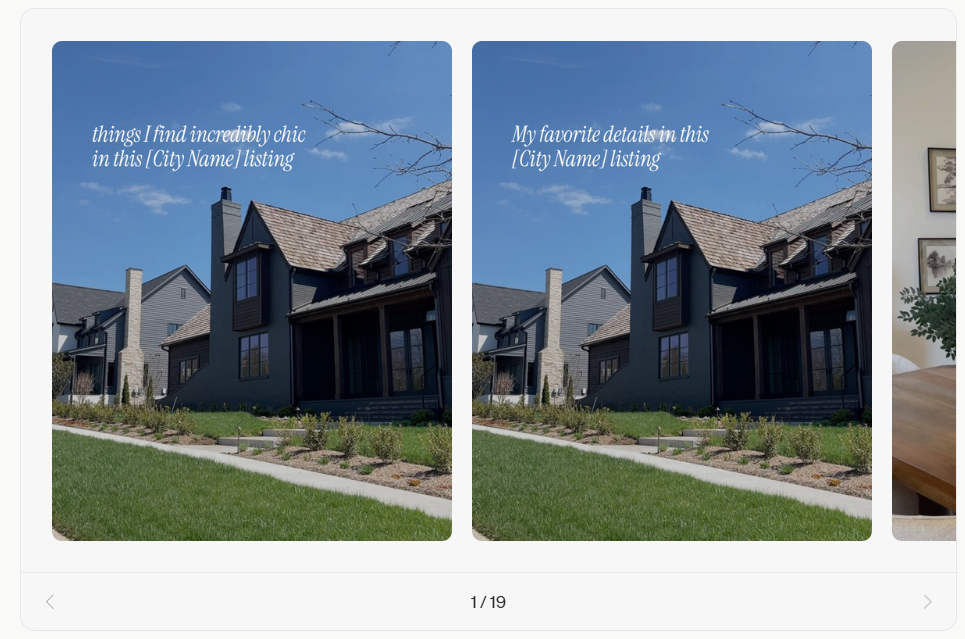
Strong listing hooks help buyers imagine the lifestyle and immediately recognize the market you serve. That’s why we recommend leading with a hook that highlights the main selling points and the city.
A few examples you could try:
- “POV: You just found the cutest 2/2 in St. Pete under $600k.”
- “You don’t see this often in San Diego.”
- “If I wanted a quiet retreat in Asheville, this is the one I’d buy.”
This turns listing content into decision-making content, which attracts potential buyers who are still evaluating their options.
The "New Listing/Listing Feature" pillar inside Coffee & Contracts gives you ready-to-use templates and captions built around exactly this approach
Use this template on your next listing
4. Create interesting and authority-driven content to engage people and stay visible
Instead of trying to speak only to people who are actively buying or selling, create content that stays interesting to a much broader audience, including the people who aren’t ready yet. That looks like posts that reflect what you’re seeing in the market, how you think through situations, how you work with clients, and what real moments in the job actually look like.
Our Authority Builder templates are designed exactly for this. They help you stay visible, build trust, and share what matters, without turning your content into something textbook or overly instructional.
Below are a few examples:
- 5 things I never skip when touring a home
- In Austin, bidding wars aren’t about demand. They’re about strategy.
- Your guide to relocating to Miami in 2026

5. Use short-form videos to connect with your audience
Short-form video works best when it feels relatable, interesting, and easy to follow, instead of a step-by-step explainer. Walk people through experiences, focus on the kinds of moments and insights that show how you approach real situations and use a top ai video generator to simplify the creation process.
Examples include:
- You move to Phoenix and now your 2026 weekends look like this
- Unfortunately, living in San Diego has ruined all other cities for me
- This could fix my attitude: Happy hour bingo at Sylvia’s NYC
These videos quickly hook the audience, help them picture life in your city, and quietly build familiarity with your brand.
Read More: Storytelling Reels for Real Estate Agents
6. Share client stories that show how you think
Social proof works when it shows how you think, rather than just closing a deal. Specific stories show your strategy and your judgment. And that’s what future clients actually respond to.
Instead of a generic quote like “We loved working with John,” share:
- The challenge they brought to you
- Your approach and reasoning
- The outcome and why it changed things for them
Examples:
- “This seller almost walked away after inspection — here’s how we re-framed objections and renegotiated to keep the deal alive.”
- “This buyer paused after the appraisal. Here’s why we waited, and how it worked out.”
These stories do more than show results. They reveal decision points that prospects care about. And help potential buyers see that you understand the situation they’re in.
7. Maintain visibility during long consideration cycles with email
Real estate has a long decision cycle. Most people look for 3–6 months online before they ever reach out. And email is the one place you own the audience with no algorithm interruptions.
To create effective emails, keep them short, specific, and helpful (not promotional). A few content ideas that consistently work:
- Weekly neighborhood snapshot
- One quick buyer/seller insight (“3 things to know this week”)
- A link to a recent social post or short-form video
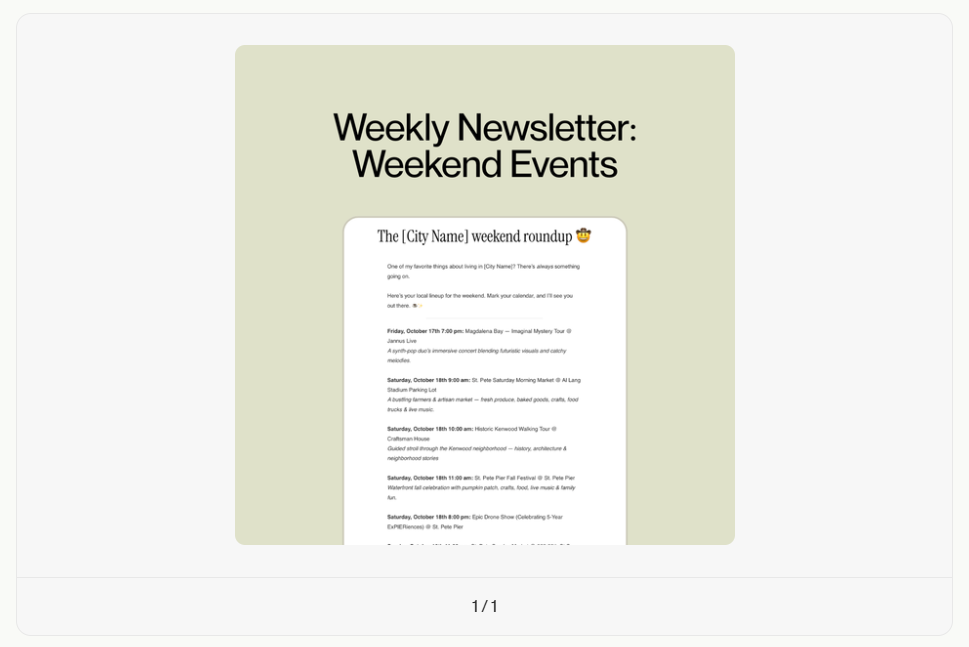
Here’s an Event Roundup email template you can use to stay connected with your audience and share valuable information with your email list.
Coffee & Contracts includes email templates for every stage of the client relationship—local updates, buyer check-ins, open house invites, and neighbor equity nudges so you can stay consistent without writing from scratch every week.
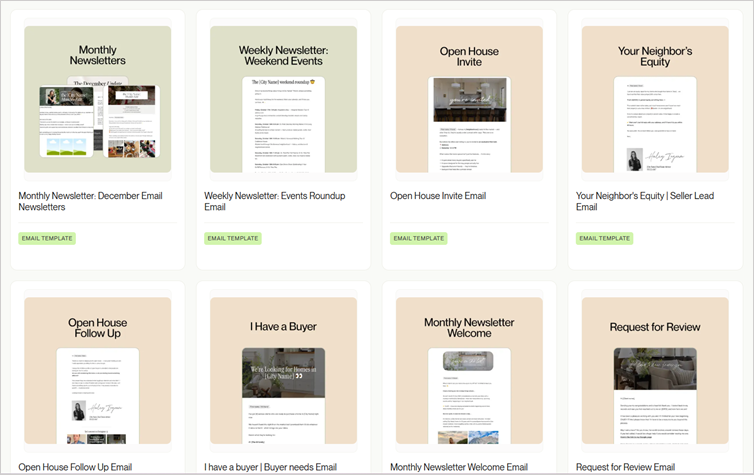
Pick a template and send your first email this week
Read More: Email Marketing for Realtors
8. Create one high-value local resource and repurpose it everywhere
A location-specific resource that solves a real problem, like a buying guide for your city, a breakdown of what homes actually sold for last quarter, a checklist for sellers this year, does a few things at once.
It attracts the right people, starts conversations, and gives you something to promote across every channel.
- ‘2026 Buying Guide for Midtown Manhattan’
- ‘What homes actually sold for in St. Pete last quarter’
- ‘Checklist for selling in Chicago this year’
People are motivated by clarity about their own context. If you give them a tool that answers a question they care about, you’re actually giving them a reason to reach out.
Here’s how this works in practice:
Create a short guide (PDF, simple landing page) focused on one community or invest in professional brochure design focused on one community.. In your weekly plan, you can repurpose this across:
- A carousel explaining the guide
- A short-form video teasing one insight from the guide
- A story poll asking what part of the area they’re curious about
- An email linking to the guide
Pair this with a clean landing page and lead capture form. People will trade their email for something that feels genuinely useful, and you now have a line into their inbox.
Check out this 7-Day Real Estate Marketing Checklist to get started with social media marketing.
9. Optimize for conversations
Posting more often doesn’t mean your marketing is better. Consistent posting without feedback loops leads to noise.
Shift your focus from ‘How many posts did I publish?’ to ‘Which posts led to real conversations?’ and track:
- Messages and DMs (the ones that ask questions)
- Form submissions (lead capture forms)
- Email replies
- Comments with intent cues (“How much is this?” / “Is this still available?”)
Look for patterns in what starts conversations. Then do more of that.
10. Design content for silent followers who don’t engage
In real estate marketing, many potential clients pay attention quietly before they ever engage, especially on social media.
Build your content with those silent viewers in mind. Posts that work for this audience tend to:
- Explain how you think, not just what you’re sharing
- Add enough context so someone understands your approach without interacting
- Speak directly to people who are “just starting to think” about buying or selling
For example, captions that walk through a pricing decision or explain why timing matters in your local market often get saved or revisited later, even if they don’t get immediate engagement.
Silent followers usually convert later. When they are ready, they reach out after weeks or months of seeing content that makes things easier to understand.
Read More: Strategies for attracting potential buyers and sellers
11. Create content that supports referral conversations
Referrals remain one of the strongest marketing channels in the real estate industry, especially when happy past clients understand how you work and how to describe your value. But referrals work better when your content helps explain why someone should choose you.
Create content that past clients and local connections can easily reference when someone asks, “Do you know a good agent?”
This includes:
- How you guide buyers and sellers through decisions
- How you approach pricing, inspections, or negotiations
- What working with you actually looks like day to day
A few examples that work well:
- “What do I explain to buyers before they make an offer.”
- “How I help sellers decide on pricing in today’s market.”
- “What clients usually worry about during inspections and how I handle it.”
This type of content gives your network language. People can clearly explain your value proposition and how you work.
The "What it looks like to work with me" template is designed for exactly this. It gives your past clients and network something concrete to point to when someone asks for a recommendation. You'll find it inside Coffee & Contracts, ready to customize!

Read More: 8 Ways to Grow Your Sphere of Influence
Real Estate Marketing Ideas You Can Use Right Away
Once your strategy is clear, these ideas help you put it into action. They attract future clients, spark conversations, and support your real estate marketing plan.
1. Run campaigns for open houses
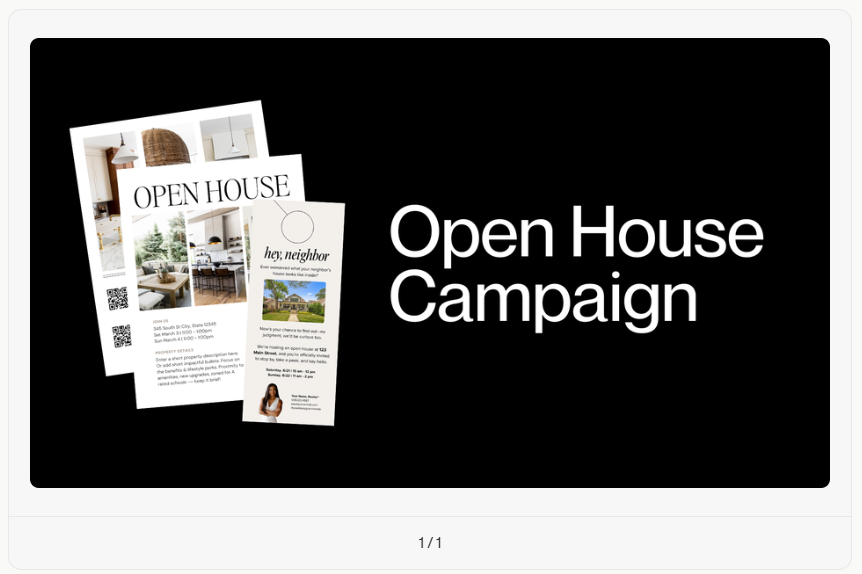
A campaign for open houses treats it like an event worth building anticipation for, and that changes the results. Instead of a single post, think across eight days: a teaser to build interest, neighbor outreach, social posts, email and SMS for real estate reminders, and follow-up content after the doors close. Each touchpoint keeps the listing in front of your audience and gives people multiple chances to engage or reach out.
Our members use this Open House Campaign template to run a structured campaign around a weekend open house. By the time the doors opened, several people had already messaged asking about the neighborhood and the price.
Grab this before your next open house
2. Turn a "Just Sold" moment into a multi-touch campaign
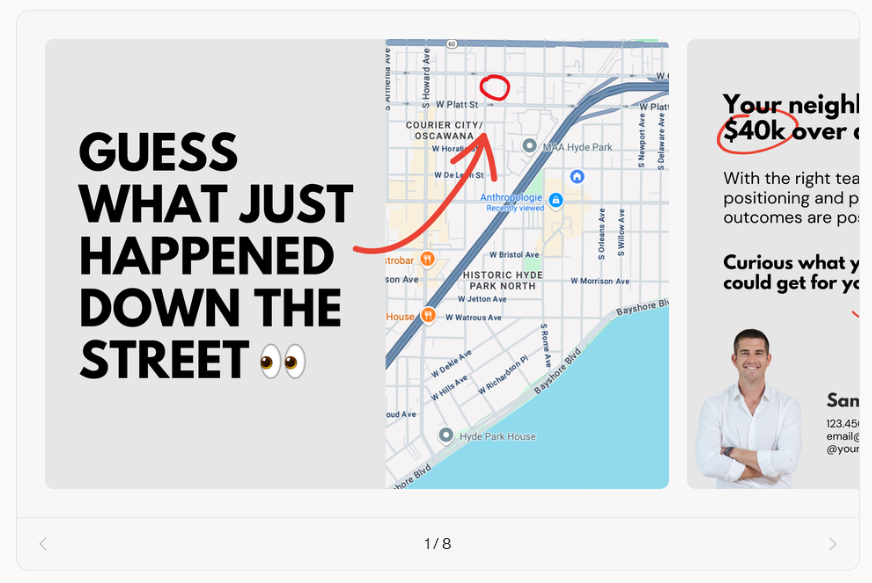
A recent sale is one of the strongest content opportunities you have, and most agents let it pass with a single post. A smarter move is to build a small campaign around it.
Start with a social post sharing the result— the price, the timeline, what made it work. Follow it with a story showing the journey from listed to closed. Then write a caption that speaks directly to neighboring homeowners who might be quietly wondering what their homes are worth right now.
This kind of campaign does two things at once: it shows your results to buyers still evaluating their options, and it plants a seed with sellers who aren't quite ready to raise their hand yet.
If you want to extend that reach beyond social, Coffee & Contracts has a "Just Sold" postcard template you can print and send to homeowners nearby—a simple add-on to a campaign that's already doing the heavy lifting digitally.
3. Use story-driven social posts tied to real events
Rather than random posts, lean into storytelling tied to real market moments, like “What I learned from this week’s inspection walk-through” or “The unexpected question buyers asked at our open house.”
These posts make marketing feel human and practical, and they often lead to DMs from people with similar concerns.
Here’s the Coffee & Contracts “Questions I get asked every week” template to help you answer the real questions that come up in your DMs, at open houses, or in your inbox. It’s a simple way to share your expertise and show people what working with you actually feels like.

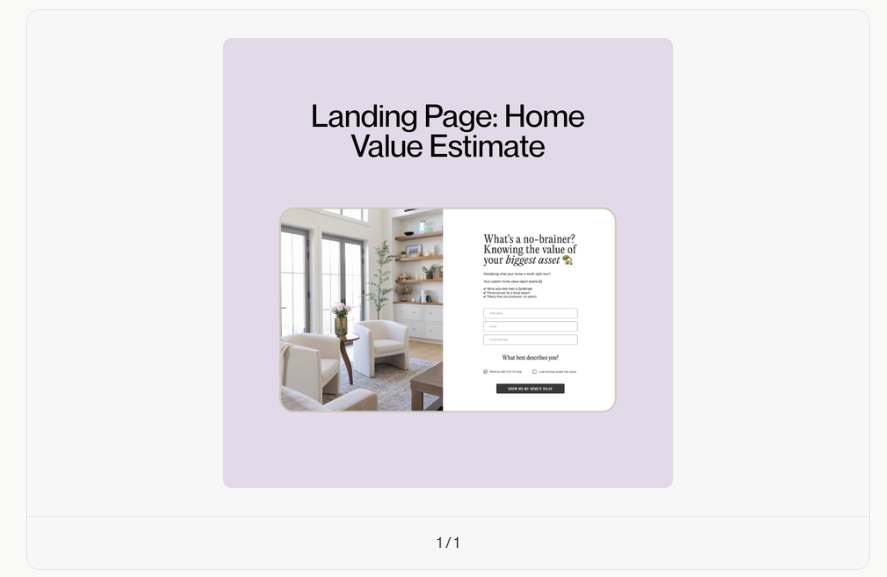
4. Publish a home value estimation landing page
A home value estimate page works particularly well for sellers, especially those who are curious but not quite ready to list. Someone who wants to know where they stand fills in their details, you follow up with a personalized market update, and a relationship starts building before they have even made a decision. By the time they are ready to list, you are already the agent they trust.
If you’re ready to implement this idea, we’ve got the perfect template for you. You can customize this for your brand and attract homeowners who are planning to list.
5. Host micro-events online and offline
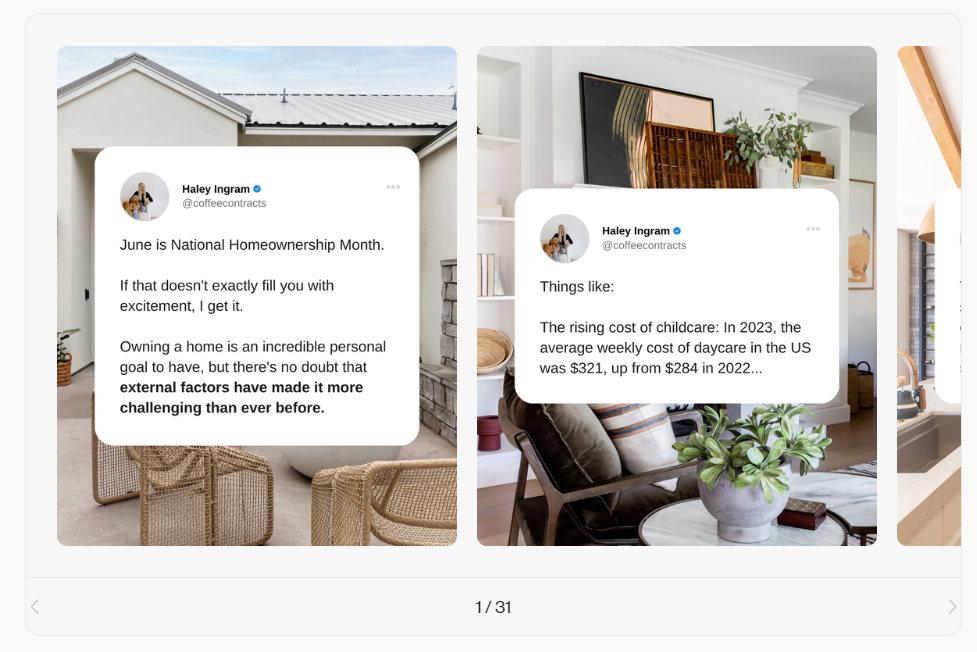
Host small local events like meetups or digital talks. For example, “What rising rates mean for buyers right now” or “3 home upgrades that actually matter in [Your City].” These micro-events position you as the local expert and give people a low-commitment way to connect.
Example: A live Q&A about home affordability at a local café that you also stream as a short Instagram Reel or use as a feed post. We’ve got a feed post template “Something we are all thinking about? House affordability” that you can use to highlight market info, your POV alongside excerpts from the live discussion.
6. Offer valuable resources as lead magnet
Give your audience something more than simple social posts or emails about monthly events. Think of resources like market comparison charts or checklists as lead magnets to support their decision-making. These can be embedded on your site and promoted in social captions or emails to drive traffic and interactions.
We’ve got an engaging “Market Report” template to help sellers estimate their home’s current value. You can use this as a lead magnet in your emails and website to offer added value to your audience.

3 Common Mistakes to Avoid in Real Estate Marketing
Real estate marketing mistakes can cost you potential clients. Here are a few mistakes to avoid:
1. Sharing market information without guidance
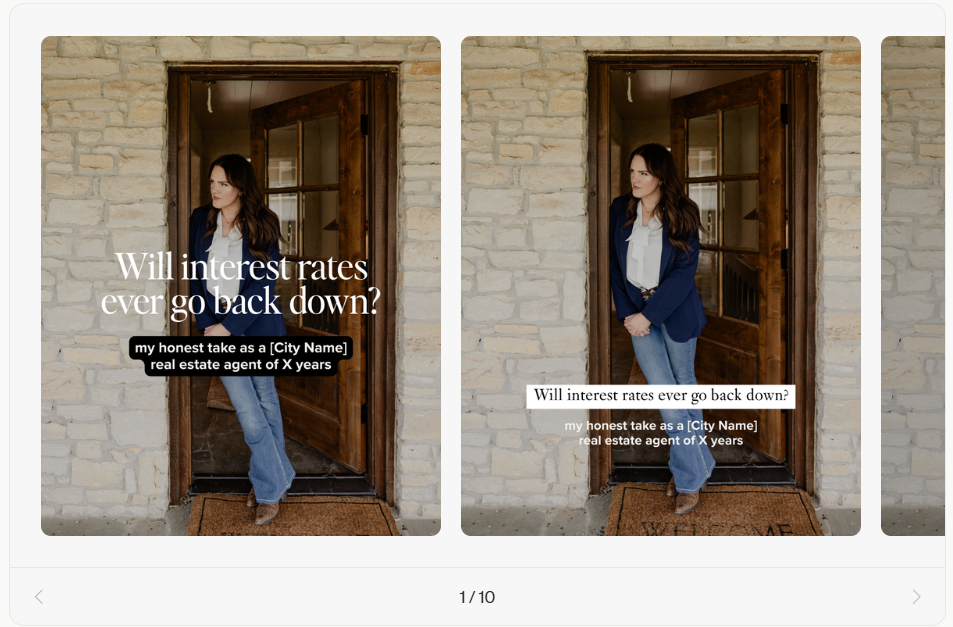
A lot of agents post market updates, but they stop right before the part people actually care about—what it means for them. This often looks like market stats without interpretation, pricing updates without context, or educational posts with jargon or explaining terms but not decisions.
What to do instead:
Most people just want clarity. When you share market data, explain how it affects different situations. Who benefits? Who should pause? What trade-offs should people expect? When your content helps people understand how to act on information, it becomes more useful and trusted.
Inside Coffee & Contracts, we have templates for crafting market info posts without sounding like an MLS report. Here’s one of them.
2. Switching strategies too often
Another common issue is constantly changing tactics. New platforms, formats, and ideas, without giving anything time to work. This usually happens when there’s no marketing plan to fall back on.
What to do instead:
Commit to a small set of strategies tied to your local market and stick with them. Instead of trying to cover everything, focus on consistency, clarity, and repetition, so results can compound over time.
3. Tracking posts instead of decision signals
It’s easy to track posts and reach, but those numbers don’t always tell you if your marketing is actually working.
What to do instead:
Pay attention to signals that show intent and decision-making:
- Questions in messages or comments
- Replies to emails
- Requests for clarification
- Submissions through lead capture forms or landing pages
Wrapping Up
Real estate marketing doesn’t need to be complicated. It needs to be clear.
When your marketing is built around local insight, real questions, and repeatable strategies, it resonates with your audience. You start showing up with purpose, helping people understand their options, and making it easier for the right clients to reach out when they’re ready.
If you’re planning to get started with real estate marketing and want support turning ideas into something practical, this is exactly where Coffee & Contracts fits. The platform is designed to give you a clear weekly plan, strategic content prompts, and local-focused templates so you always know what to post and why it works.
Ready to explore Coffee & Contracts? Get a free week of content.
Frequently Asked Questions
1. What is the best way to market real estate?
There's no universal answer, but the agents who build consistent pipelines tend to share a few habits.
That usually includes creating:
- Local content that speaks directly to your target audience and reflects your market
- Social media posts that explain decisions, not just showcase listings
- A consistent email marketing rhythm to stay connected with past and future clients
- Repurposed resources like local guides or market snapshots that work across every channel
The goal isn’t to be everywhere. It’s to show up clearly in the places your local market already looks for information.
2. Does real estate marketing work on most social media platforms?
It can work on most platforms, but spreading across all of them usually just dilutes your effort. You're better off choosing one or two where your local audience actually spends time and showing up there with intention. For most agents, Instagram is the strongest starting point because visual, location-driven content tends to perform well there.
3. What marketing strategies work best for selling properties?
The strategies that work best are the ones that help buyers picture themselves in the home and feel confident about the decision.
That includes:
- Listing content that explains who the home is right for
- Short real estate videos that answer buyer questions
- Open house campaigns that build anticipation across social, email, and text before the doors even open
- Story-driven posts that answer the real questions buyers are already asking
When your marketing reduces uncertainty, it becomes easier for the right people to take the next step.
4. Which questions do sellers ask about marketing strategies?
Sellers tend to be practical. They want to know how the property will be marketed online, which platforms matter, whether open houses still work in their area, and how you plan to attract serious buyers instead of just generating views.
The agents who win these conversations are the ones who can walk sellers through the strategy, not just hand them a list of marketing materials.
5. How can social media polls or engaging questions attract buyers?
Polls and questions work because they make it easy for someone to interact without committing to anything. Instead of asking people to reach out directly, you're inviting a low-stakes response that quietly signals interest.
Examples include:
- “Would you choose location or square footage?”
- “Which kitchen style feels more livable?”
- “Would you buy now or wait?”
These organic social media posts spark conversation, surface buyer preferences, and help you understand your target market, while keeping your social media pages active and human.
6. How do you create an effective real estate marketing plan or budget?
An effective real estate marketing plan starts with clarity, not spending.
Key steps include:
- Defining your future clients and local market
- Choosing 2–3 primary marketing channels
- Allocating budget between owned content, marketing tools, and optional paid advertising
- Setting realistic goals for new leads and conversations
A good marketing budget supports consistency over time rather than one-off marketing campaigns.
7. What metrics should be tracked for real estate campaigns?
Skip the vanity metrics. What you want to track are the signals that show someone is moving toward a decision—lead form submissions, DMs that ask real questions, email replies, landing page visits, and how often your content is showing up in local search. These numbers tell you whether your marketing is working and give you something concrete to refine, rather than just more data to collect.

More like this

What Agents Get Wrong About Choosing an Ideal Client
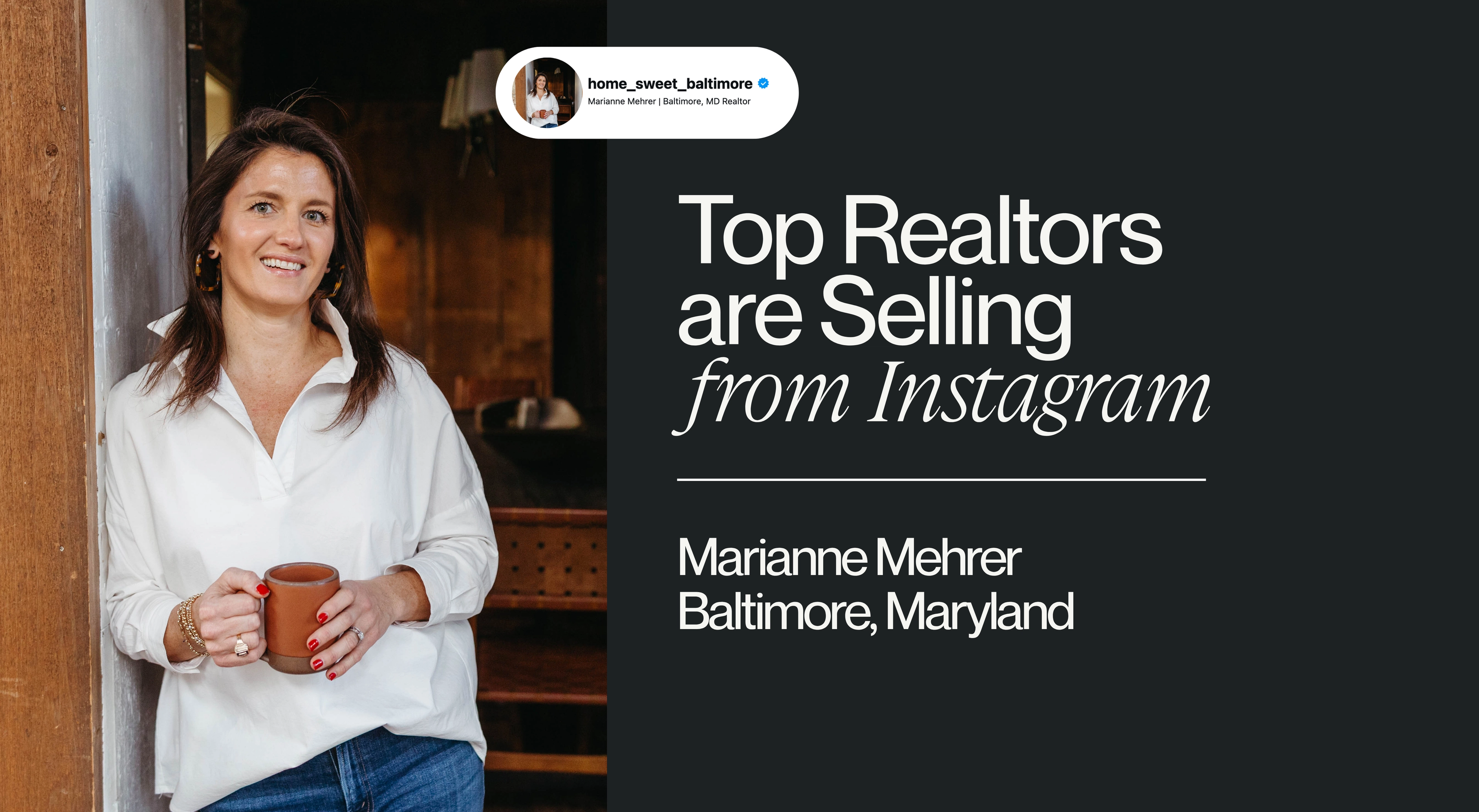
$9M Closed. Another $7M in her Pipeline. All from niching down on Instagram