Email Marketing for Realtors: Tips, Templates & Tools
Table of Contents
- Does Email Marketing Work for Realtors?
- How to Get Started with Building an Email List?
- Step 1. Create a landing page
- Step 2: Choose a freebie your ideal clients actually want
- Step 3: Link it in your Instagram bio
- Step 4: Set up an automated email that delivers your freebie
- What Emails Should You Actually Send as a Realtor?
- 1. Emails that keep new leads engaged
- a. Local updates and community emails
- b. Short and helpful market insight emails
- c. Welcome emails
- 2. Emails that build relationships and trust (Consideration stage)
- a. Follow-up emails
- b. “Thinking about moving?” emails
- c. Stay connected after closing emails
- 3. Emails that create action (Decision stage)
- a. New listings emails
- b. Open house invite
- How to Know if Your Email Marketing Is Working?
- Best Practices to Improve Your Email Marketing Outcomes
- Email Marketing Tools That Can Help
- Kickstart Email Marketing with Coffee & Contracts
- Frequently Asked Questions
- 1. What is email marketing for real estate?
- 2. Do real estate agents use email marketing?
- 3. What is the best email marketing platform for real estate agents?
- 4. Is a weekly or monthly email newsletter a good idea for real estate agents?
- 5. How important is it to email your listing to other agents?
Someone downloads your homebuyer guide in January. You send them a few helpful emails about the buying process. By June, they're texting you to schedule a showing. That's what happens when email marketing actually works.
Email marketing keeps you connected with people during the months it takes them to get ready for a move. But the tricky part is knowing where to start.
What you need is an email drip campaign—a simple sequence that works in the background so you can stay top of mind without writing a single email from scratch each week. Set it up once. Let it run.
Here are practical tips, ready-to-use email marketing ideas for realtors, and simple tools to help you build a system that runs quietly in the background, while you focus on showings, contracts, and actually closing deals.
Does Email Marketing Work for Realtors?
Email marketing actually works well for real estate. It has an average conversion rate of 1–3% per campaign. And this adds up fast when your list is full of warm leads. That’s because emails are like one-to-one personalized letters. They help you create a relationship and even turn cold leads warm.
Additionally, email works across the board. It doesn’t matter if your buyers are Millennials or Gen Z, first-timers or repeat clients. If they’re on your list, they’re reachable.
From what our members tell us, email drip campaigns are the most effective for nurturing new leads over time. And email newsletters (personalized property updates, listings, market info) help you stay in touch and build trust.
Here’s more to why it works.
- You're talking to people who already care. Your email list isn’t cold. These are people who raised their hand and signed up at an open house, grabbed your guide, or opted in from Instagram. That's a very different conversation than cold outreach.
- It builds trust through consistent presence. A welcome email, a helpful market update, a check-in with a useful resource, these small touchpoints add up. That's how your audience remembers you through the months it takes for someone to go from “thinking about it” to “ready to move.”
How to Get Started with Building an Email List?
To build an email list, you simply have to create a landing page, choose a free resource, link it in your Instagram bio, and set up an automation. Here are the details:
Step 1. Create a landing page
A landing page is a single webpage designed to capture emails. The goal is simple: someone gives you their name and email in exchange for something valuable like a Home Buyer’s Roadmap or an Expired Listing Guide.
Keep it clean. One clear promise, one form, one call to action. That's it.
Step 2: Choose a freebie your ideal clients actually want
This is the thing you're giving away in exchange for their email. You could use something that our members found super useful: Home Buyer Roadmap lead magnet template to attract buyer leads and help you grow your email database.
Inside, your audience will get a walkthrough of the entire buyer’s process, from prep to financial closing, with FAQs, checklists, and next steps.
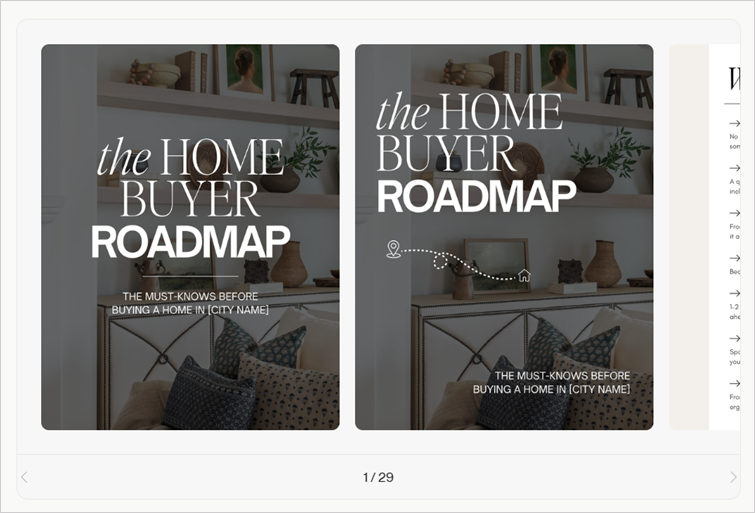
Some other Coffee and Contracts templates your buyers may find helpful include relocation guides, buying and selling guides, seller playbooks, and home maintenance checklists.
Read More: 18 Lead Magnet Ideas for Real Estate Agents
Step 3: Link it in your Instagram bio
Once your landing page is ready, make it easy to find. Add the link to your Instagram bio and start mentioning it naturally in your content.
For example:
- A Story that says, “If you’re thinking about buying a home this year, grab my homebuyer roadmap in my bio.”
- A Reel where you say, “I put together a free guide that walks you through the home buying process. Link’s in my bio.”
New followers should see that free resource within their first few visits to your page. That’s how casual scrollers slowly turn into warm leads.
Step 4: Set up an automated email that delivers your freebie
When someone fills out your form, the guide or resource you want to share should land in their inbox right away.
That is how you take the first step towards gaining their trust. They share their details and get a valuable resource that supports their home-hunting journey.
For most agents, it plays out pretty naturally.
- After an open house, a new buyer downloads your guide while the interaction is still fresh.
- The follow-up email lands in their inbox almost instantly, keeping the momentum going.
- Over the next few days, they spend time with the resource and start thinking through their next steps.
- When questions come up, they reply, schedule a call, or start a real conversation with you.
This simple automation keeps your email marketing running in the background while you focus on showings, contracts, and life.
What Emails Should You Actually Send as a Realtor?
The best email marketing ideas for realtors focus on one thing: helping people through the real situation they're currently in. A new homebuyer, for example, might appreciate clear insights on financing options or what comes next after a showing.
As your list starts to include both past clients and new leads, your emails can evolve with it.
That’s when you begin shaping messages that feel relevant to where each person is in their journey, while still sounding natural, helpful, and true to your voice.
1. Emails that keep new leads engaged
a. Local updates and community emails
Send quick emails about what’s happening in your area—upcoming events, new spots opening, seasonal changes, or market activity. They stay highly relevant to your target audience and give potential buyers a reason to keep opening your emails.
And this consistent presence does more than you'd think.
When someone on your list spots an event they love, visits the neighborhood, and starts picturing themselves living there. They know you're the agent who can guide. That's when the “Do you have any listings nearby?” message lands in your inbox.
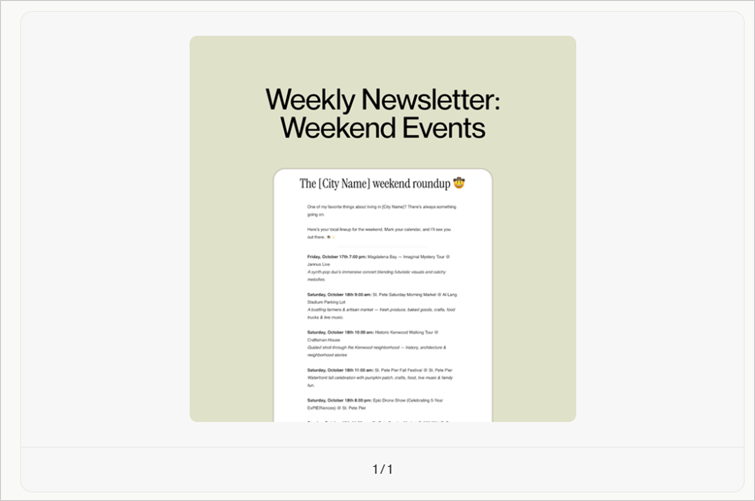
Many of our members use the Events Roundup Email to do exactly this. They send this to their contacts weekly to keep them updated about what’s going on around the city and stay connected.
Read more: How to Generate Real Estate leads from Instagram in 2025
b. Short and helpful market insight emails
Share short notes about market trends or what you’re seeing with buyers and sellers lately. These emails position you as a trusted local expert without overwhelming your audience with data.
And here’s the thing: you never really know who on your email list is just waiting for the right moment to reach out.
Someone who's been watching the market for months might read one update about shifting interest rates in your email and think, “okay, now's the time.”
That’s how a simple email can turn your passive subscriber into an actual lead.
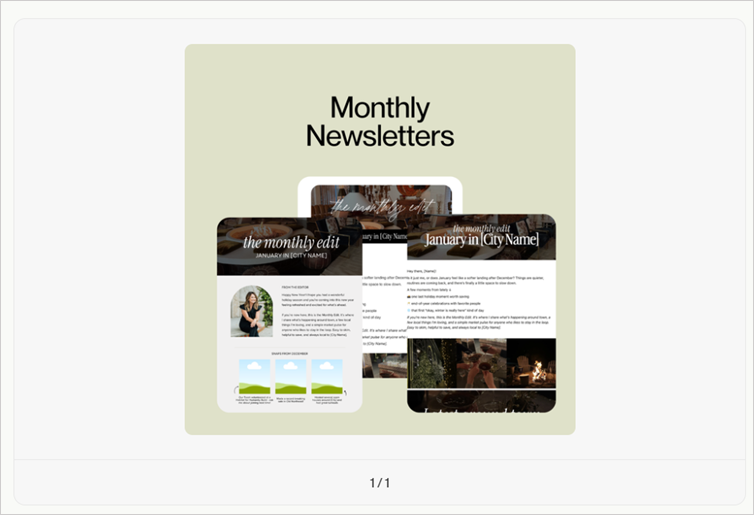
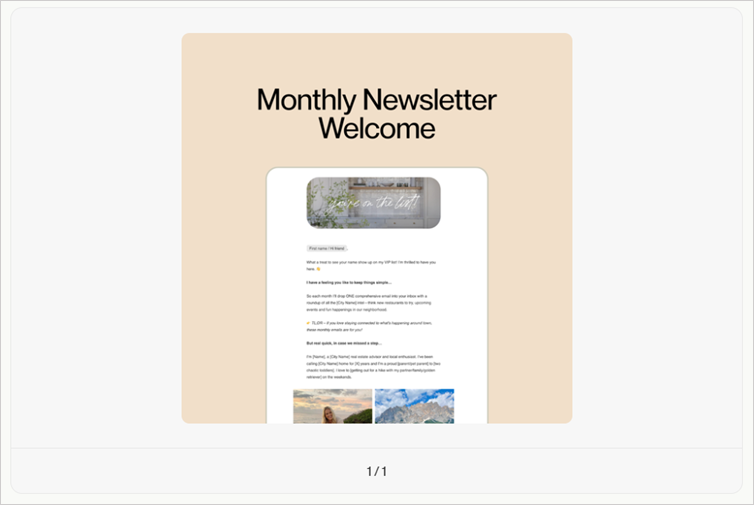
However, before you can get them interested in the content, you need to entice them with the design. These Monthly Newsletter templates from Coffee and Contracts have been favored by several of our users. You can customize these to share local market insights. For example,
- A spotlight section highlighting a retail spot opening soon or exciting real estate news.
- A list of events happening in [City] in [Month]
- A listing spotlight with 3 local listings with their USPs.
More on customizing monthly email newsletter templates.
c. Welcome emails
Most agents skip the welcome email or treat it like an afterthought. That’s the first missed opportunity because this one email sets the tone for everything that follows. It sets expectations, introduces who you are, and starts the relationship.
A good welcome email makes new subscribers feel seen and when that first impression lands well, they're far more likely to open everything you send after it. So, keep it simple:
- A warm introduction
- A quick note on what they can expect from you (market updates, local tips, listing features?)
- A freebie or resource they signed up for
You can also add a soft call to action like “hit reply and tell me what you're looking for” to open the door to a real conversation early.
However, getting the tone and email layout right matters too. Our Welcome Email template gives you the starting point to draft your welcome email. It’s already designed to feel warm, professional, and on-brand.
Just swap in your intro, add your voice, and tell them what’s coming. That's it. Your welcome email is done.
2. Emails that build relationships and trust (Consideration stage)
a. Follow-up emails
Send follow-up emails after open houses, downloads, DMs, or inquiries. Because most people won't reach out on their own, even if they're genuinely interested. Life gets busy, other listings pop up, and you might quietly be off their radar.
A simple follow-up email is what keeps that from happening. It reminds them you're paying attention, gives them a reason to respond, and more often than not, it's what turns a “maybe later” into an actual conversation.
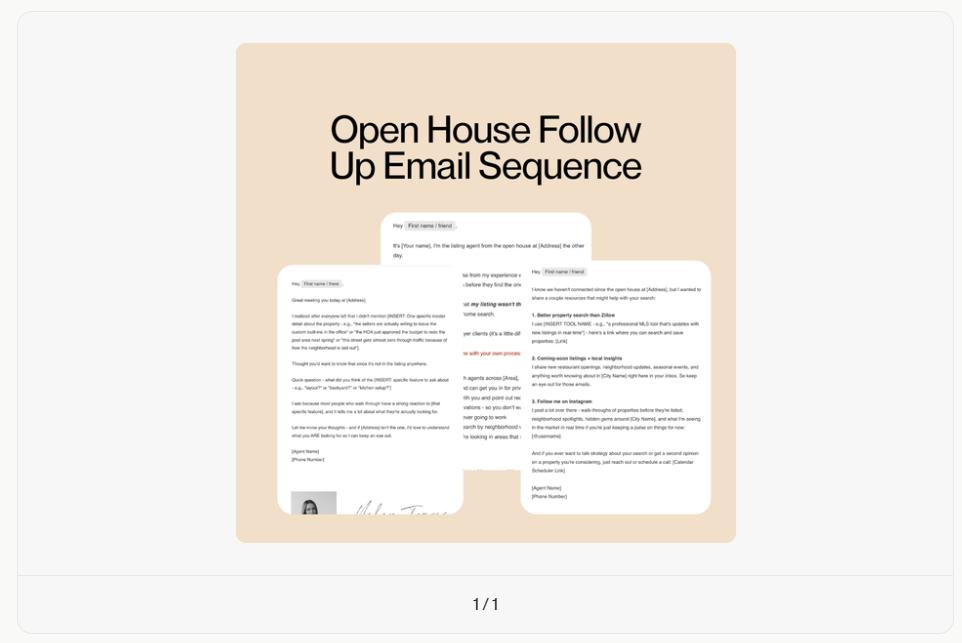
The best part? We have a ready-to-use Open House Follow-Up email sequence that takes care of everything: a warm thank-you, a recap of the home's standout features, and a link to similar listings that match what they're looking for.
b. “Thinking about moving?” emails
These emails speak directly to people in the consideration stage—people who are thinking about a move, but are not ready to act yet. You help them explore the buying or selling process, reflect on their options, and stay connected with you until the timing feels right.
And when it does, you're the agent they approach because you’ve been showing up, consistently, with something useful every time.
💡Quick tip: Include free resources in these emails to nurture leads. Local city guides, relocation guides, neighborhood breakdowns—these give readers something tangible to hold onto while they're still in the “figuring it out” phase.
Coffee & Contracts has ready-made templates for all of these, so you're not starting from scratch every time.
Here’s one that has been working well for our members:
![Coffee & Contracts’ Relocating to [City Name] template showing buildings and the city skyline with text.](https://cdn.sanity.io/images/nab4s2h0/production/c23f1177e45b579e5ca42ffc500b1ba8adacfa00-754x514.png?w=3840&h=2618&q=80&fit=max&auto=format)
c. Stay connected after closing emails
Regular emails to past clients keep your relationships warm long after the deal closes. And that’s where a lot of business actually comes from (referrals, repeat clients, and enthusiastic recommendations).
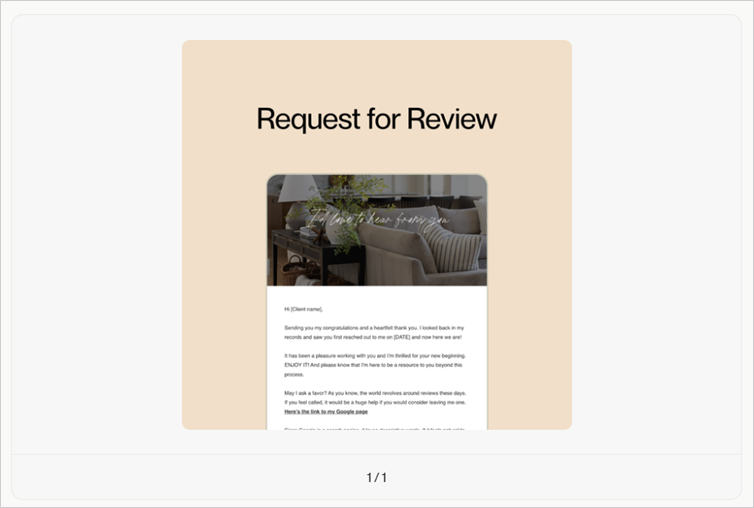
Even a simple check-in like “how’s the house treating you?” shows you care, but you can also use structured touchpoints like a request for a review email to strengthen trust and support your social proof. If you aren’t sure how to ask for a review, here’s the Request for Review email template that our members use to follow up with a client after the deal, requesting a review for their services.
3. Emails that create action (Decision stage)
a. New listings emails
These emails are designed to connect the right property with the right people. That means, you don’t blast everyone’s inboxes with the same listing. You use targeted emails to start conversations and uncover real opportunities.
Suppose you find a “just listed” home in a specific neighborhood within a certain price range. You email the leads who've already shown interest in that area or price range. On the flip side, when a buyer comes to you with a very specific wishlist, you email your past clients, other agents, and local contacts with exactly what they're looking for.
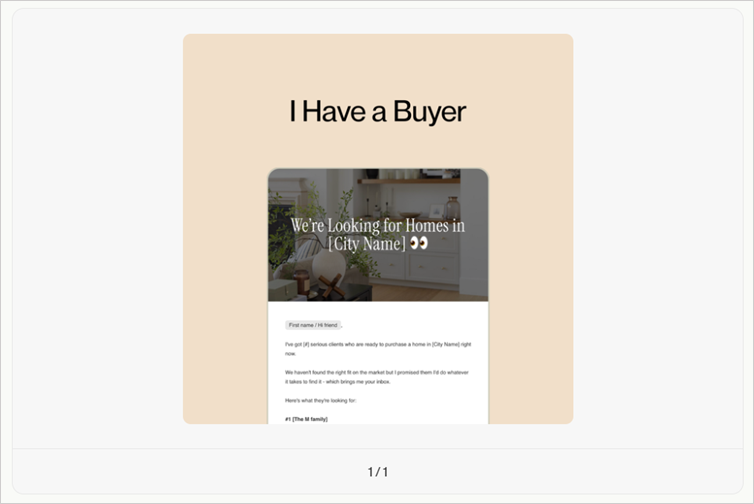
Our members use the “I Have a Buyer | Buyer Needs” email template to screen their network for homes that meet their buyer’s needs. It helps them find off-market opportunities and move conversations toward showings without relying only on public listing announcements.
b. Open house invite
You start with an invite, follow up with a reminder, send a quick last-chance note the day before, and finish with a follow-up after the event. This short email sequence helps people remember the event.
They show up more and you get a natural reason to stay connected with the people who attended.
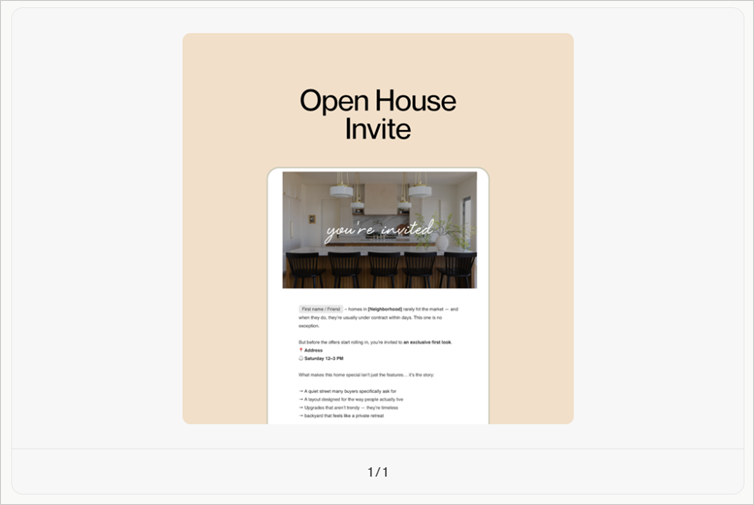
And it all starts with getting that first invite right. The Open House Invite template gives you a structure that's warm, clear, and easy to act on—so the people most likely to show up actually do.
How to Know if Your Email Marketing Is Working?
Track a few key metrics to see if your email marketing efforts are bringing in results. Check the open rate to see how many people opened your email, along with the click-through rate, which hints at how many readers clicked a link inside it.
Also pay attention to the unsubscribe rate, as it signals how many people chose to opt out.
- Open rate is the percentage of subscribers who actually open your email. For real estate, the average open rate is 30-40%. This tells you that your subject lines are working, people are interested in reading your emails, and they recognize your name in their inbox.
- Click-through rate (CTR) measures how many people clicked that “download this guide” link inside your email. In real estate email marketing, the average CTR is 5-6% . If your CTR falls within this range it means there are people who have raised their hands, showing they’re actively planning a move and your resource caught their attention.
- Replies and conversations simply mean your potential client is engaging. Questions about a property, comments about timing, or “can you send me more info?” messages are all signals of warm leads.
- Unsubscribe rate is feedback. Anything below 0.20% is standard. But if it climbs above the average it typically means that your content may not be resonating with the audience.
Read more: Content ideas that generate leads on Instagram as a real estate agent in 2025
Best Practices to Improve Your Email Marketing Outcomes
The best email marketing practices for realtors come down to five habits: sending on a consistent schedule, writing subject lines that sound human, giving every email one clear next step, personalizing where it matters, and keeping content rooted in real estate life.
- Send on a schedule you can keep. Weekly, bi-weekly, or monthly. Consistency matters more than frequency. Showing up regularly builds familiarity, which builds trust.
- Write subject lines like you talk. Skip the hype. Short, specific, and natural almost always outperform clever or salesy.
- Give each email one clear next step. Don't overload people. One email should have one main point and one action: reply, click, RSVP, download. The simpler the decision, the more likely they'll take it.
- Personalize where it counts. Mention their city, price range, or what they've shown interest in and your email instantly feels like it was written just for them.
- Keep it grounded in real estate life. Talk about listings, the market, open houses, client stories, what you're actually seeing out there. Emails that feel rooted in real work get read.
Read more: The Do’s and Don’ts of Email Marketing
We’re not yet done. Below is a bonus section👇
Email Marketing Tools That Can Help
If you're ready to take this further, here are three tools real estate agents rely on.
- Follow Up Boss is a CRM plus email platform for busy agents who want email, follow-ups, pipeline, and communication under one roof. Notes, tags, reminders, saved property preferences. If you want things organized, this is the one.
- Constant Contact is beginner-friendly and apt for new realtors. Create emails, signup forms, and landing pages for email opt-in. Built-in reporting tools track open rates, click-through rates, and audience engagement.
- Flodesk is a design-first email marketing tool. Build visually stunning emails with custom fonts and brand colors, grow your list with high-converting opt-in forms, automate subscriber journeys, and sell products directly through built-in sales funnels and checkouts.
Kickstart Email Marketing with Coffee & Contracts
If there's one takeaway from this entire guide, it's this: email marketing, when done right, is one of the most powerful tools a realtor can have. It keeps you connected, builds trust over time, and turns cold contacts into clients.
But getting there takes work. Building a drip campaign from scratch, figuring out what to send, testing what's working, and tweaking what isn't—that's a lot to figure out on top of everything else on your plate.
That's where Coffee & Contracts comes in. You get done-for-you email templates, lead magnets, and drip sequences built specifically for real estate agents, so you can skip the guesswork and get straight to building the relationships that actually close deals.
Sign up to get a week of free content and see if it clicks!
Frequently Asked Questions
1. What is email marketing for real estate?
It's how you stay in touch with buyers, sellers, and past clients using email. You share new listings, send helpful updates, follow up with warm leads, and build real relationships over time.
2. Do real estate agents use email marketing?
The most consistent agents swear by it. Social media helps you get discovered, but email is where long-term client relationships grow. Top agents use email to nurture leads, support listings, reconnect with past clients, and turn conversations into closings.
3. What is the best email marketing platform for real estate agents?
It depends on how you work. Some agents prefer Follow Up Boss for simple automations and landing pages. Others use Flodesk for design templates and simple automations. The best choice is the one you'll actually use consistently.
4. Is a weekly or monthly email newsletter a good idea for real estate agents?
Both can work. A weekly email keeps you very visible if you have frequent listings, market updates, or upcoming events. A monthly newsletter is easier to maintain and still powerful for staying connected. What matters most is consistency. Choose a rhythm you can stick with.
5. How important is it to email your listing to other agents?
Very important. Emailing your new listings to other agents increases exposure, speeds up the selling process, and helps more potential buyers discover the property. It also strengthens your

More like this

What Agents Get Wrong About Choosing an Ideal Client
$9M Closed. Another $7M in her Pipeline. All from niching down on Instagram