What Zillow Preview Means for Real Estate Agents (And What to Post About It)

Update: Since this post was published, Zillow reversed their ban on pre-marketing to competing platforms, and Compass dismissed their lawsuit. The situation is moving fast — which is exactly why your clients need an agent who's paying attention.
The Quick Version
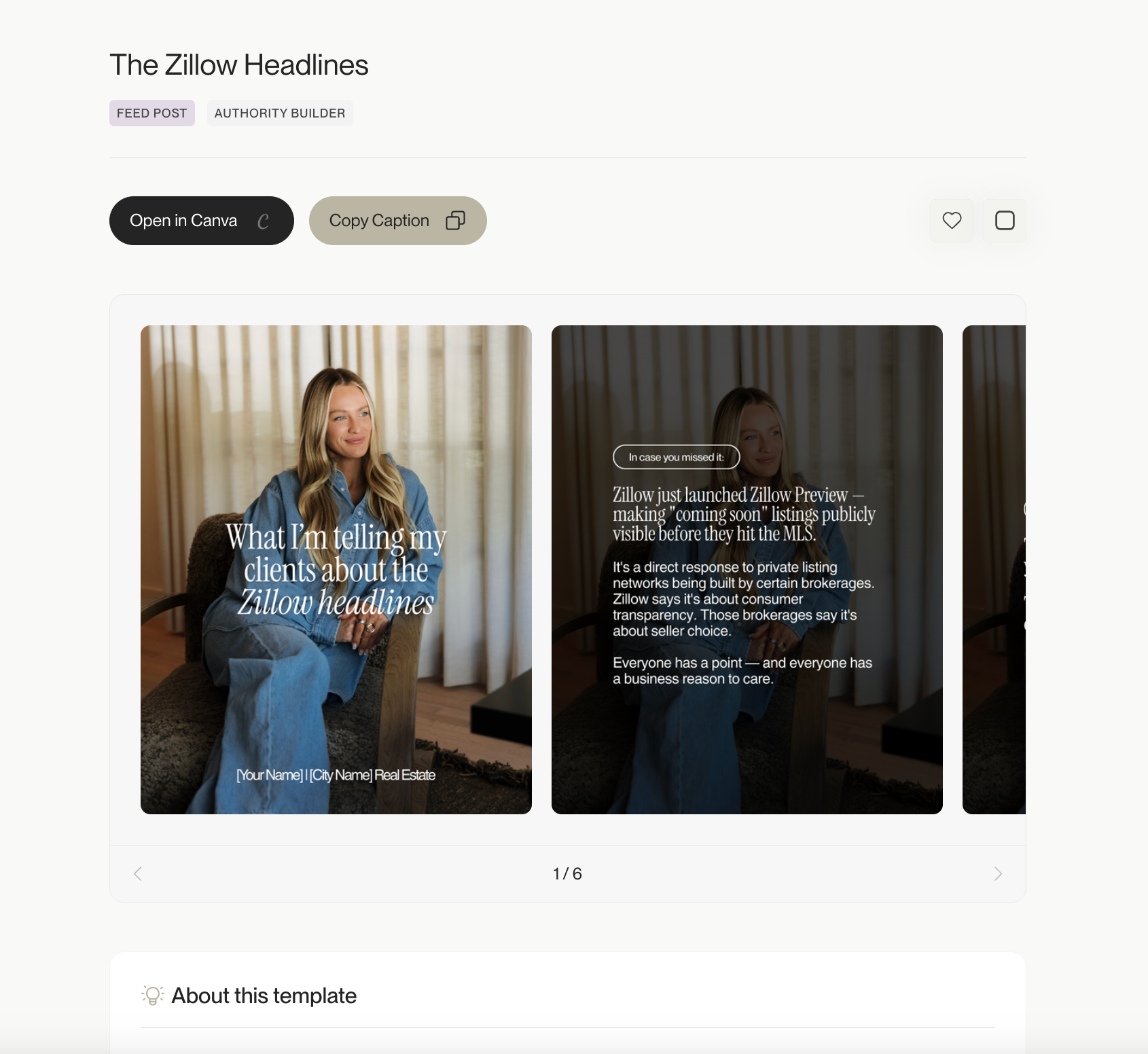
Zillow just launched Zillow Preview — a product that lets sellers make their "coming soon" listings publicly visible on Zillow and Trulia before they hit the MLS.
Keller Williams, RE/MAX, and HomeServices of America are already in. Participating listings get elevated placement in search results, and buyers can save, share, and pre-schedule tours during the preview period.
This is not a random product launch. It's a direct response to a growing trend of sellers choosing to pre-market listings privately — visible only to buyers working with certain agents. Zillow says that keeping listings out of public view hurts consumers. Not everyone agrees. And that's where it gets interesting.
The Two Sides
The case for public pre-market listings: When more buyers can see a home, sellers get more exposure and more competition. More competition typically means stronger offers. If your goal as a seller is maximum value, broad visibility is hard to argue against.
The case for private pre-market listings: Some sellers genuinely don't want their home blasted across the internet before they're ready. Privacy, timing, and the ability to test the market quietly are real considerations — especially for high-profile sellers or unique properties. Agents who offer private pre-marketing argue that seller choice should drive this decision, not platform politics.
Both of these positions are legitimate. The right answer depends on the seller, the home, and the market — which is exactly why your clients need an agent who understands the difference.
What's Actually Going On Behind the Scenes
Every company involved in this debate — on every side, including Zillow — profits when listings flow through their platform. That doesn't make anyone the villain — and the consumer benefits are real. But it's worth understanding that listing inventory is the most valuable asset in real estate, and every company in this fight has a business reason to care about where it lives.
Watch what they do, not just what they say.
What This Means for Your Marketing
This is a news cycle. And news cycles are content opportunities.
Right now, buyers and sellers in your market are seeing headlines about Zillow, private listings, and portal wars — and they have no idea what any of it means for them personally. You do. That's the post.
The agents who show up during moments like this — not to pick a side, but to educate and contextualize — are the ones who build the kind of trust that converts to clients. You don't need to have a hot take. You just need to show up and be useful.
5 Content Ideas to Post This Week
1. The local angle "Here's what the Zillow news actually means for buyers and sellers in [your city]"
This is the highest opportunity play right now. National coverage is everywhere — local context is not. What does your market look like? Low inventory? High demand? Pre-market exposure might mean something completely different where you sell than it does in another city. That's a post only you can write, and it's the one that builds real authority.
2. The seller education post "Before you agree to pre-market your home, ask your agent these questions"
Protective, practical, and it positions you as the agent who puts outcomes first. Works regardless of which side of the debate you fall on.
3. The buyer education post "If you've been losing out on homes before they even hit the market — here's why"
Buyers are frustrated. They feel like they're always one step behind. Explain what's been happening in plain language. Be the person who finally makes it make sense.
4. The question your clients are actually asking "Should you pre-market your home? Here's how to decide."
This is what buyers and sellers are genuinely Googling right now. Walk through the pros and cons of pre-marketing — when it makes sense, when it doesn't, and what questions to ask your agent. No portal politics. No brokerage loyalty. Just seller strategy that positions you as the advisor who helps clients think it through — regardless of where you hang your license.
5. The positioning post For non-Compass agents: "I don't work for Zillow. I don't work for Compass. I work for you."
For Compass agents: "My job isn't to pick a side in the portal wars. My job is to get you the best outcome."
Simple. Clean. Reminds your audience exactly whose interests you represent.
C&C Members: We created a post that's 95% done for you:
The Bottom Line
The platforms will keep fighting. The rules will keep changing. The agents who win long-term aren't the ones who picked the right portal — they're the ones who built an audience that trusts them enough to call when it's time to buy or sell.
That's the whole game. And it starts with showing up consistently and saying something worth hearing.
If you want help knowing what to post — not just during news cycles like this one, but every single week — that's what Coffee & Contracts is for.
Coffee & Contracts is a content membership for real estate agents who want to attract clients through social media — without the cold calls, the cringe, or the guesswork.

More like this

What Agents Get Wrong About Choosing an Ideal Client

$9M Closed. Another $7M in her Pipeline. All from niching down on Instagram